
Industrial and commercial construction
Commercial Groundworks
Commercial groundworks cover site preparation and below-ground construction for buildings and external areas. That includes foundations, drainage, service connections and the hard surfaces around the building.
Site investigations and ground conditions
Ground conditions have a major bearing on the cost and method of commercial groundworks. Topographical surveys establish site levels, while ground investigations help determine bearing capacity, groundwater conditions and the suitability of excavated material for reuse. Existing service records help locate buried utilities but may need to be checked by further investigation. Soft ground, unexpected obstructions or contamination can change the excavation, foundation and disposal requirements.
Foundations, drainage and underground services
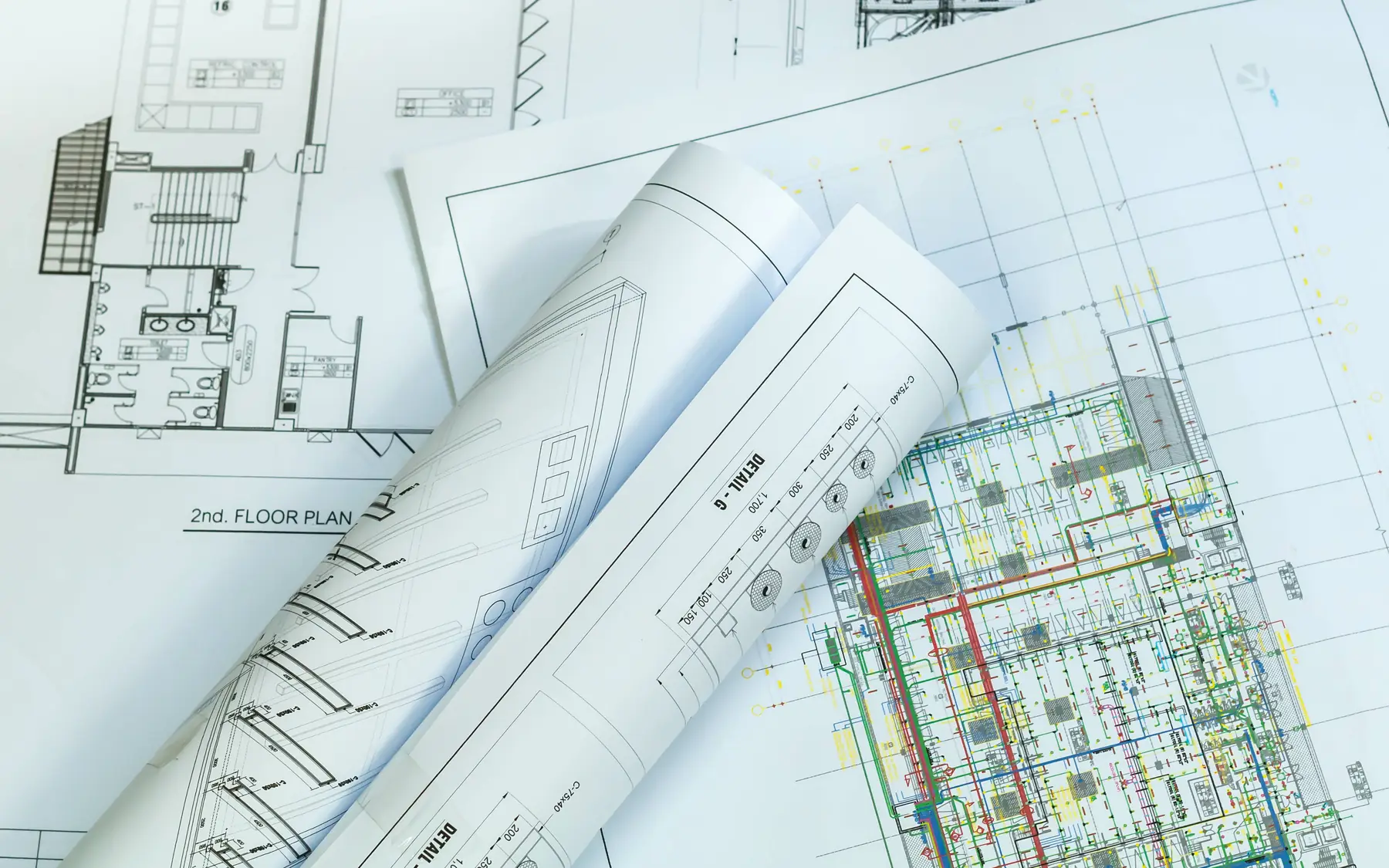
Foundations, drainage and incoming services often occupy the same areas below ground. Their positions and levels need to work together. A drain crossing a pad foundation, for example, may require a change to the foundation detail or drainage layout. Excavated material must also be assessed for reuse or disposal, with suitable backfill placed and compacted to the required standard.
Commercial yards, roads and external areas
Vehicle types, loading patterns and the use of each external area shape the design. A service yard taking articulated lorries needs a far heavier pavement than staff parking or a pedestrian area. Kerbs, levels, drainage connections and boundaries are part of the same package where the job includes them.
Working on an occupied site
Existing traffic, buried services and restricted access can change the order of excavation and construction. On an occupied site, working areas may need barriers, temporary traffic arrangements or short road closures. For a new building, foundation positions, holding-down bolts where required and finished levels must be checked before the structure above is erected.
Main elements of commercial groundworks
| Item | What it affects |
|---|---|
| Surveys | Topography, ground conditions and existing services |
| Below ground | Foundations, drainage and incoming services |
| External areas | Yards, roads, parking and pedestrian access |
| Sequence | Enabling works and handover to the main build |
Groundworks and the wider construction project
Plan your project
Commercial Project Planner
Indicative commercial building costs
Common questions
Frequently asked questions
How do ground conditions affect foundations and drainage?
The bearing capacity and movement characteristics of the ground influence foundation design. Groundwater levels can affect excavation, temporary support and drainage installation. Weak or variable ground may require deeper foundations, ground improvement or changes to the drainage construction method.
Can groundworks be a separate package?
Yes. Groundworks can be carried out under a separate contract. Responsibility for setting out, excavation support, foundation levels, service connections and the condition of the site at handover must be established. This is particularly important where the building contractor follows the groundworks contractor onto the site.
Request a quote
Complete the form and we will get back to you.